The Trap
The 1099 Loophole 🔒
Let’s cut the marketing fluff. When a Silicon Valley tech bro says "Gig Economy," he means "Feudalism with an App."
Here is the scam:
If you are an Employee (W-2), your boss has to pay payroll taxes, contribute to Social Security, and usually subsidize your health insurance. That costs money.
If you are an Independent Contractor (1099), you are legally a "small business." Your boss pays nothing. Zero.
So, companies like Uber, Lyft, DoorDash, and Amazon’s delivery network realized they could save billions by firing their workforce and rehiring them as "entrepreneurs."
They tell you: "Be your own boss! Set your own hours!"
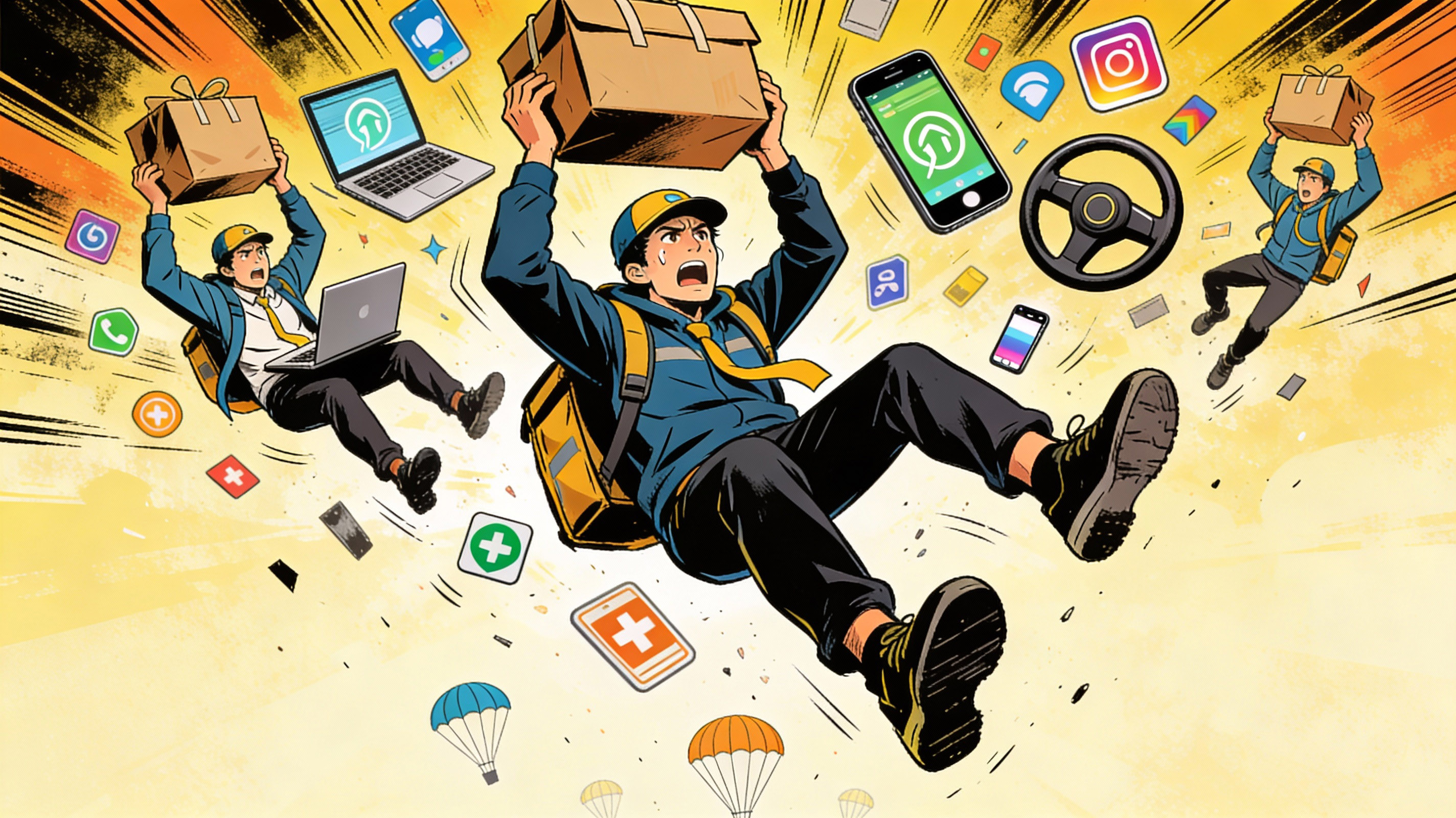
The Reality: You are not a boss. You are a serf driving a Kia. You have no health insurance, no sick leave, and no safety net.
When you get sick, you don't go to the company doctor—you go to the Emergency Room. And because you cannot pay the bill, the cost is shifted to the taxpayer (Medicaid) or to people with insurance (higher premiums).
These companies are not "disrupting transportation." They are freeloading. They rely on the public safety net to keep their workforce alive so they can charge $8 for a ride and keep the stock price high.
The Trap: They privatize the profit and socialize the tumor.
The Fix
The SAFEC+ Solution: The Anti-Avoidance Cannon ✅
We do not care what the contract says. We care about the money. SAFEC+ introduces a brutal new standard called the "Anti-Avoidance Rule for Contract Labor" (Section 202(e)).
We don't wait for a court to decide if you are an employee. We apply a simple math test:
1. The 75% Rule (Section 202(e)(2)(A)) If you get more than 75% of your income from a single source, that source is your employer for health contribution purposes. Period. If you drive full-time for Uber, Uber pays the 8% Employer Contribution on your earnings, just like any other company.
2. The Control Test (Section 202(e)(2)(B)) Even if you split your time, if the company exercises "substantial control" over how you work (e.g., they track your GPS, set the price, and punish you for declining rides), they pay.
3. The Credit (Section 202(e)(4)) The money the company is forced to pay is credited to you. It offsets your individual tax liability.
SAFEC+ ends the arbitrage. If you use human labor to make money, you contribute to the fund that keeps those humans alive. The "Gig" is up.
The Critics
"This Will Kill Flexibility"
The apps will threaten to shut down or fire everyone. They will say, "If we have to pay benefits, we can't let you choose your hours!"
This is a hostage threat, not an economic law. Paying an 8% tax does not physically prevent them from letting you log in when you want. It just cuts into their margin. If their business model relies on paying $0 for their workers' health, it is not a business model—it is a parasite.
"Prices Will Rise"
Your Uber ride to the airport might cost $2 more. Your burrito delivery fee might go up.
Yes. It should. Right now, that burrito is artificially cheap because the driver is one medical emergency away from bankruptcy. You are currently underpaying for the service because the driver is subsidizing your convenience with their own risk. We are simply correcting the market price to reflect reality.
The Multi-App Loophole
Drivers might split their time perfectly (30% Uber, 30% Lyft, 30% DoorDash) to avoid the 75% threshold.
The Mitigation: That is why we included the "Substantial Control" clause. If the algorithm tells you where to go and how much to charge, the tax applies regardless of the income percentage.