The Trap
The Ransom Note 💊
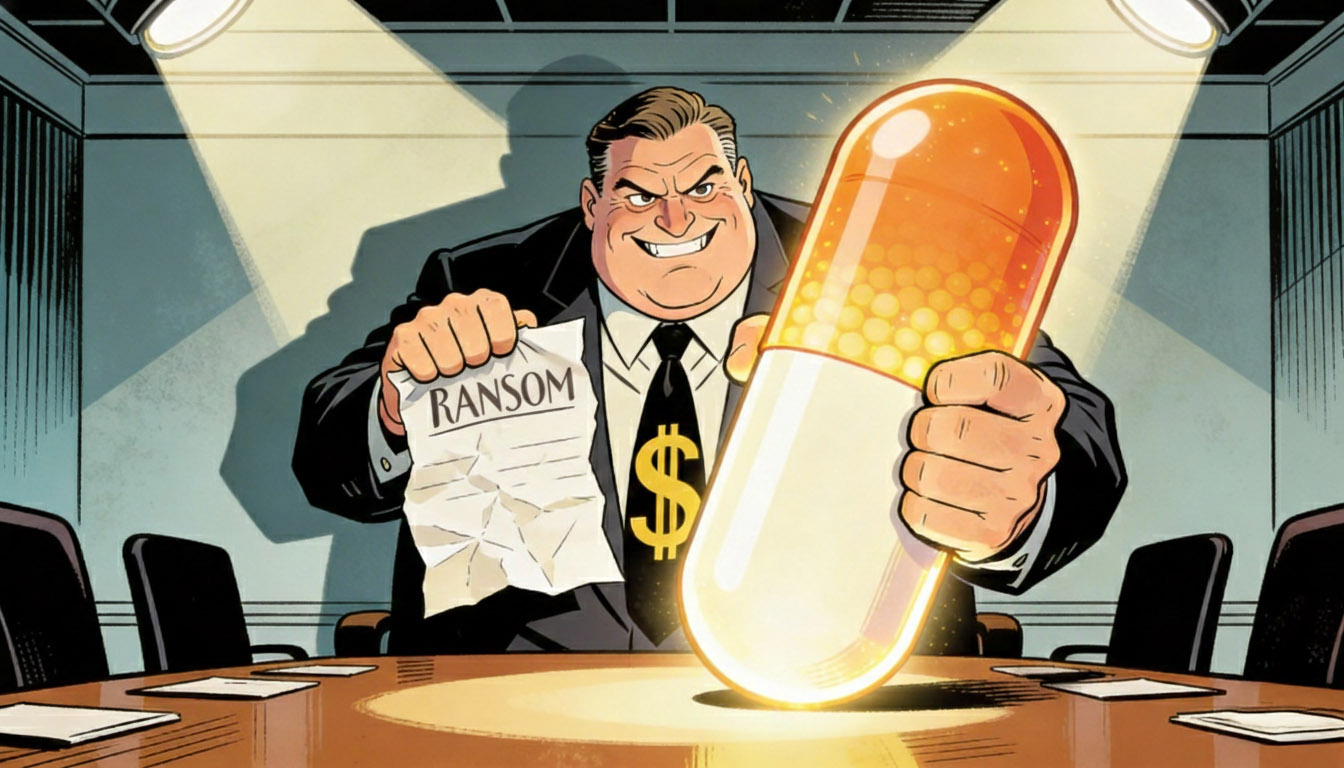
It is the oldest threat in the book. "Nice life you have there. Shame if someone stopped curing it."
Every time Congress whispers about lowering drug prices, the Pharmaceutical Lobby screams that "Innovation" will die. They paint a picture of a lonely scientist in a lab coat, turning off the lights and walking away from a petri dish containing the cure for Alzheimer's because the government capped the price of insulin.
This is a lie. It is a hostage negotiation disguised as economics.
Here is the reality of the "Innovation" budget:
- Marketing > Science: most Big Pharma companies spend more on "Sales, General, and Administrative" (SG&A) costs than they do on Research Development (R&D). They spend more money persuading you to ask your doctor about a purple pill than they do making the purple pill.
- The Stock Buyback Machine: When they get a tax break or a windfall, they do not build more labs. They buy back their own stock to boost the share price for executives. From 2016 to 2025, the largest drug companies spent hundreds of billions on buybacks and dividends—money that came from you, but never went back into science.
- The NIH Factor: The hard work—the risky, basic science that actually discovers the mechanism of disease is largely funded by you already, through the National Institutes of Health (NIH). Pharma steps in at the end, buys the patent, paints it, and charges you $100,000 for the finish coat.
They are not "funding innovation." They are funding a hedge fund that happens to sell drugs.
The Trap: They demand a ransom to release the cure. But you already paid for the kidnapping kit.
The Fix
The SAFEC+ Solution: Funding Science, Not Sales ✅
We call their bluff. SAFEC+ separates the business of selling drugs from the science of making them.
1. The Price Ceiling (Section 405) We stop paying the "American Sucker Tax." Under Section 405(c), the SAFEC+ Plan pays the International Reference Price. If a drug costs $50 in France, we pay $50. If the company says they cannot "innovate" at that price, they are admitting they are less efficient than every other developed nation on Earth.
2. Fast-Tracking Real Cures (Section 406) Currently, companies waste billions repeating safety trials just to satisfy US bureaucrats. Section 406 creates "Regulatory Reciprocity." If a drug is approved by a "Gold Standard" agency (like the European Medicines Agency or Japan's PMDA), we fast-track it here. This slashes the cost of development, removing the excuse for high prices.
3. Direct Support for the Little Guy (Section 407) The real innovators are often small biotech startups, not the giants. Section 407 waives FDA fees for small companies and provides grants to help them survive the "Valley of Death" without selling out to a predator.
4. Public Infrastructure (Section 408) We lower the cost of trials by running National Platform Trials. The government provides the infrastructure; the companies provide the molecule. This democratizes innovation so you don't need a billion dollars to cure a disease.
SAFEC+ funds the lab coat. It starves the marketing department.
The Critics
"The Pipeline Will Dry Up"
Lobbyists will claim that without unlimited profits, no new drugs will be developed.
We might lose the "me-too" drugs—the 17th slightly different antidepressant or the erectile dysfunction pill that works 2 minutes faster. But Section 405(f) creates an exception for true breakthroughs. If you actually cure cancer, we will pay you. If you just repackage an old drug, the party is over.
"Capital Flight"
Critics say companies will leave the US market.
Go where The US is the biggest market in the world. If they leave, they lose their biggest customer. Furthermore, Section 408 makes the US the cheapest and fastest place to run clinical trials, making it more attractive for R&D, even with lower prices.
Venture Capital Shock
Biotech startups rely on Venture Capital, and VCs rely on big exits. If we cap the exit price, VCs might invest less in risky science.
The Mitigation: This is a real risk. That is why Section 407 and Section 408 are crucial. By government-subsidizing the cost of development (the risk), we make it possible to be profitable without needing to charge extortionate prices. We are shifting the model from "High Risk/High Price" to "Lower Risk/Fair Price".