
The Trap
The Deferred Bribe 🔒
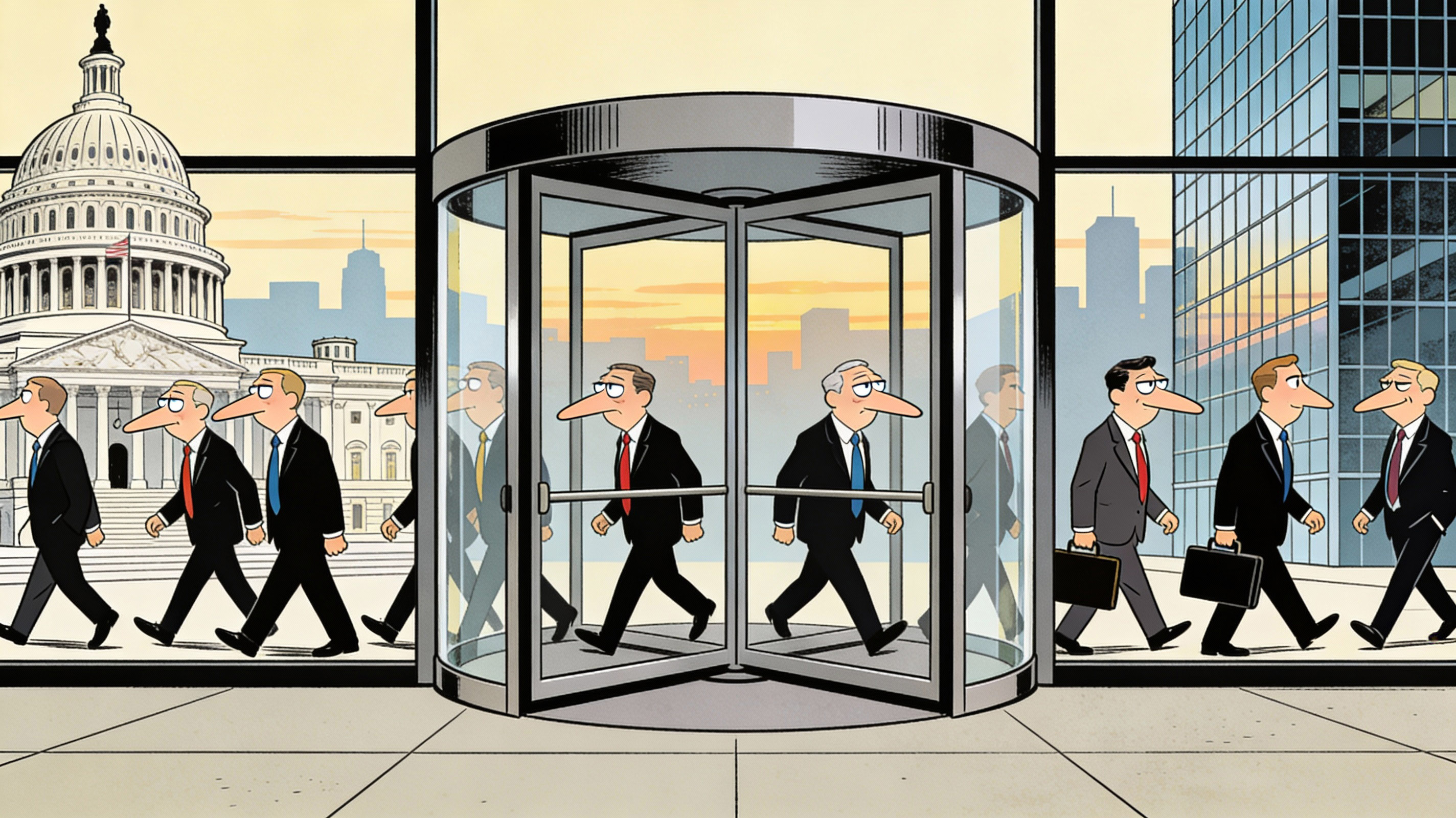
Why does a Senator who earns $174,000 a year leave office with a net worth of $10 million It is not because they are good at coupon clipping. It is because of the Revolving Door.
Here is how the "audition" works:
- The Setup: A Senator is ostensibly in charge of regulating the pharmaceutical industry.
- The Soft Touch: Instead of passing tough laws, they pass "industry-friendly" tweaks. They delay price caps. They add loopholes to patent laws.
- The Payoff: The moment they retire, they are hired as a "Strategic Consultant" or Board Member for the very companies they just regulated. The salary $2 million a year.
This is not a conspiracy; it is a career path.
Billy Tauzin wrote the law banning Medicare from negotiating drug prices. Then he retired and became the CEO of PhRMA for $2 million a year. He didn't write a law; he wrote his own job offer.
When a politician looks at a CEO, they do not see a target for regulation. They see their future boss. They are not governing; they are interviewing. And you do not sue the company you are trying to get hired by.
The Trap: The corruption is not in the brown paper bag passed under the table. It is in the job offer waiting on the desk the day after they leave.
The Fix
The SAFEC+ Solution: Scorched Earth ✅
We cannot ban them from taking the job—lawyers will always find a loophole around "ethics rules." So, SAFEC+ does something more effective. We destroy the value of the job.
1. Destroying the Patron (Section 1004) Under Section 1004, duplicative private health insurance plans are sunsetted. If UnitedHealthcare's core business model is illegal, they cannot afford to hire a retired Senator for $5 million to protect it. You cannot consult for a ghost.
2. Capping the slush Fund (Section 405) Pharma companies pay lobbyists with "excess profits"—the money they make by charging the US 400% more than Europe. Section 405 caps US prices at the International Reference Price. When we strip away the predatory margin, we strip away the slush fund used to buy politicians.
3. The Public Servant Mandate By moving the financing to a dedicated Trust Fund (Section 201) and enforcing strict Administrative Cost caps (Section 207), the entire system is put on a diet. There is no fat left to feed the parasites.
SAFEC+ does not lock the revolving door. It burns down the building they are trying to enter.
The Critics
"We Need Industry Expertise"
Lobbyists love to claim that hiring former officials brings "expertise" to the private sector.
They are not hired for what they know; they are hired for who they know. They are hired to sell access. SAFEC+'s standardized, transparent payment rules (Section 402) remove the complexity that requires "insider access" to navigate. When the rules are simple, you don't need a former Senator to explain them.
"Brain Drain"
Critics argue that if we punish the industry, smart people will leave government service because there is no "pot of gold" at the end.
Good. If the only reason you served your country was to sell it out later, we don't want you. We want regulators who are feared by the industry, not courted by it.
The Lobbying Blitz
Before this bill passes, the industry will spend every last dollar in their war chest to stop it. This will be the most expensive political battle in history.
The Mitigation: This is why the bill is designed to be implemented fast. Section 1005 starts the transition immediately. We rely on the fact that once the public receives the benefit (no deductibles, no networks), no amount of lobbying money can take it away without political suicide.